

Summary and Comment
Part 1. Summary
As reported in several news outlets, on July 9, the Rev. Rebecca Todd Peters spoke to The Community Church of Chapel Hill Unitarian Universalist in Chapel Hill, North Carolina. Dr. Peters is an ordained minister in the Presbyterian Church USA and a professor at Elon University in North Carolina.
If one wants to evaluate a position especially a position that one opposes, one must be able to summarize understandably that position. In this set of articles, I want first to set forth the position of Dr. Peters. In the next article, I want to evaluate critically her position.
The speaker strode to the pulpit wearing a ministerial robe. Her stole was unusual because it was embossed with the name Planned Parenthood and the logo of that organization embossed thereon. The Rev. Rebecca Todd Peters thanked the congregation for allowing her the opportunity to speak.
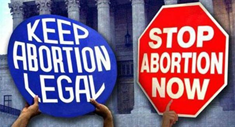
Rev. Peters began by saying that talking about abortion makes people uncomfortable. Yet, abortion and the regulations concerning the procedure have been at the front burner of public debate since the Supreme Court laid down the Dobbs decision earlier this year. The type of discourse used in the abortion debate does make an impact on how abortion is viewed. Rev. Peters’ position is that Roman Catholics and conservative Evangelicals have been instrumental in shaping the debate. Her contention is that the debate has been founded on false premises. Peters calls this “the abortion imaginary.” The abortion imaginary is based on premises such as,
· The only necessary abortions are “PRIM” ones, citing reasons of Prenatal health, Rape, Incest, and the health of the Mother.
· Women who have abortions do so for selfish reasons.
· Abortion is a sin.
To her, those premises provided a “toxic theology” which must be undone.
Citing her own work and that of her research team, Dr. Peters states that they have worked to research the stories coming from people of faith who have had abortions. Those women have internalized the message that abortion is a sin. It was at that point where she spent much of her time.
The Bible says nothing about abortion, according to Rev. Peters. But, it is a dominant feature of the theological narrative, requiring a counter-narrative. Calling abortion a sin requires a certain hermeneutic, a methodology for Biblical interpretation. “The anti-choice hermeneutic is that from conception a zygote is biologically, morally, ontologically, and in every other way indistinguishable from a baby,” says Peters. Biblical texts are used to justify this contention, including Psalm 139:13-16. Passages in Jeremiah and Job are also used to assert that God was with the unborn Biblical figures in the womb.
Dr. Peters then moved to her own account of two pregnancies and her own choice of abortion. “I felt God’s presence with me as I made the decision to end two pregnancies and I felt no guilt, no shame, no sin,” she said. A forced pregnancy or birth is not holy, she indicated. “I cannot fathom a God who would imagine otherwise.”
Changing and upsetting the prevailing narrative of the abortion imaginary comes down to several underlying premises.
· Prenates are not yet human beings.
· Women are moral agents.
· “Abortion is health care” is right and true.
· Abortion is a blessing.
· Abortion is an act of love.
· Abortion is a moral good.
· Abortion is an act of grace.
· Pregnant people are trustworthy moral agents.
Those who are prochoice should not “cede the interpretation of sacred texts” to the other side. Dr. Peters closed by saying that a morally rich theology must be developed based on reproductive dignity, justice, and love.
In this first article, I believe I have stated Rebecca Todd Peters’ position faithfully although I do not agree with it. In my next article, I will offer some criticisms of her position.
 Mark Riser - Apologist